Sunblock in Pakistan: How to Choose the Right SPF for Oily Skin and Use It Every Day
Reviewed by Fatima, PharmD, licensed pharmacist
Quick answer: For Pakistan's strong sun, use a broad-spectrum sunblock of SPF 30 or higher every morning; SPF 50 to 60 gives a useful buffer in summer. Choose a light, non-greasy texture for oily skin, and a tinted formula if you have dark spots or melasma. Apply two finger lengths to the face and neck and reapply every two hours outdoors.
In much of Pakistan the summer sun is strong enough to tan and damage skin in minutes, and UV levels stay high for most of the year. Daily sunscreen is the single most effective step for preventing dark spots, tanning and early ageing. It also helps every other product in your routine work better. Here is how to choose one and use it properly.
Why sunscreen matters so much here
The UV index in cities like Lahore, Karachi and Islamabad regularly reaches very high to extreme levels in summer. UV light causes sunburn and tanning, darkens acne marks and pigmentation, and breaks down collagen over time. UVA rays also pass through clouds and car and home windows, so you are exposed even on overcast days or indoors near a window.
What to look for
- Broad spectrum. This means it protects against both UVB (burning) and UVA (tanning, pigmentation and ageing).
- SPF 30 or higher. SPF 30 blocks about 97% of UVB, and SPF 50 to 60 blocks about 98%. The higher number gives you a buffer, because most people apply less than the tested amount.
- A texture you will actually wear. In heat and humidity, a light, non-greasy formula is far easier to use every day than a heavy cream.
- Tint, if you have pigmentation. Tinted sunscreens contain iron oxides, which also help block visible light. Visible light can worsen dark spots and melasma in medium and deeper skin tones.
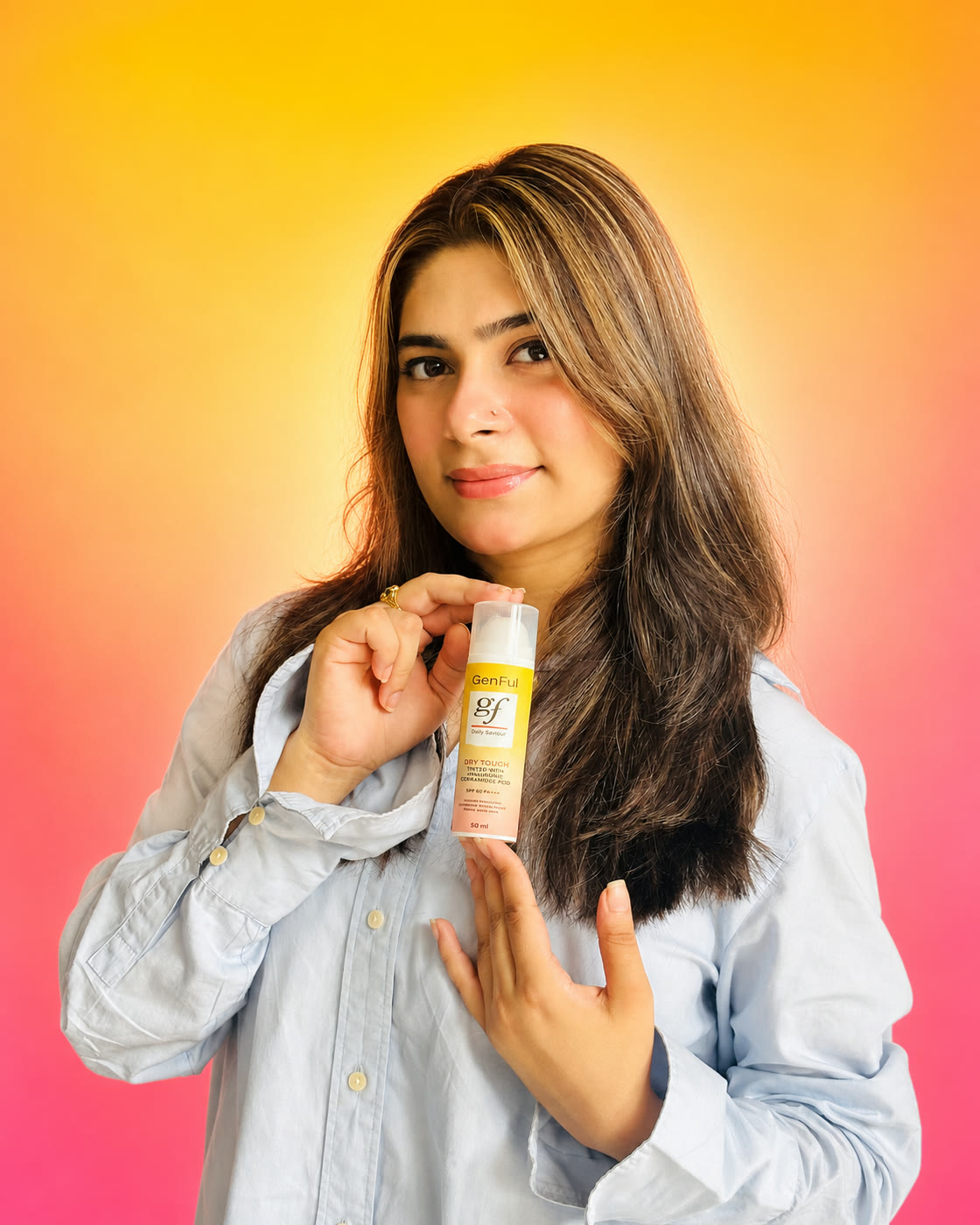
GenFul Daily Saviour Tinted SPF 60 was made for these conditions: broad-spectrum protection with modern photostable filters, a tint that blends without a white cast, and a light, breathable finish with panthenol and hyaluronic acid to keep skin comfortable.
How much to apply
Most people use about a quarter of the amount that was tested, which means they get much less protection than the label says. For the face and neck, use about two finger lengths: squeeze a line of sunscreen along your index and middle fingers. Apply it as the last step of your morning routine, 15 minutes before going out.
When to reapply
Reapply every two hours when you are outdoors, and straight after sweating heavily, swimming or washing your face. If you are indoors all day away from windows, one morning application is usually enough.
Sunscreen with acne-prone or oily skin
Choose an oil-free, lightweight formula and apply it over a gel moisturiser. Wash it off properly at night: cleanse once to remove sunscreen and makeup, and a second time if your skin still feels coated. Leftover product is more likely to clog pores than the sunscreen itself.
Sunscreen and active ingredients
If you use exfoliating acids such as glycolic acid, or brightening serums, sunscreen is essential. Exfoliants make skin more sensitive to the sun, and without protection, sun exposure undoes the progress brightening products make.
| SPF | UVB blocked (approx.) | Good for |
|---|---|---|
| SPF 15 | 93% | Not enough for Pakistani summers |
| SPF 30 | 97% | Everyday minimum |
| SPF 50 | 98% | Summer, outdoor days, dark spots |
| SPF 60 | 98%+ | Extra buffer when people under-apply (most do) |
| Type | Pros | Watch out for |
|---|---|---|
| Tinted (iron oxides) | Also blocks visible light, which darkens pigment; evens tone; no white cast | Pick a shade that blends |
| Clear chemical / hybrid | Invisible, light textures | Some can sting near eyes |
| Mineral (zinc, titanium) | Gentle for sensitive skin | Often leaves a white cast on brown skin |
| Product | Key ingredients | Best for | When to use | Price |
|---|---|---|---|---|
| Daily Saviour Tinted SPF 60 | Photostable broad-spectrum UV filters, iron oxides, panthenol, hyaluronic acid | Oily and sensitive skin, dark spots, no white cast | Every morning, last step | Rs 1,519 |
Quick checklist
- Broad spectrum, SPF 30 or higher (SPF 50 to 60 is ideal for Pakistan's summers).
- Two finger lengths for face and neck, every morning.
- Reapply every two hours outdoors and after sweating.
- Use it on cloudy days and near windows too.
Frequently asked questions
Which SPF is best for Pakistan?
Use at least SPF 30 every day. In summer, or if you are outdoors, prone to tanning or treating dark spots, SPF 50 to 60 gives a better margin because most people apply less than the tested amount.
What is the best sunblock for oily skin?
Choose an oil-free, lightweight, non-greasy formula that does not leave a heavy film, and apply it over a gel moisturiser. Wash it off properly at night.
Do I need sunscreen indoors or on cloudy days?
Yes, if you sit near windows or go out at all. UVA rays pass through clouds and glass and cause tanning and pigmentation.
Does tinted sunscreen help with dark spots?
It can. The iron oxides that give tint also block visible light, which can worsen pigmentation and melasma in medium and deeper skin tones.
How much sunscreen should I apply on my face?
About two finger lengths for the face and neck. Most people use a quarter of that and get far less protection than the label says.
What is the price of tinted SPF 60 sunblock in Pakistan?
GenFul Daily Saviour Tinted SPF 60 is Rs 1,519 with cash on delivery across Pakistan.
اردو میں خلاصہ
پاکستان کی تیز دھوپ میں روزانہ صبح کم از کم ایس پی ایف 30 والا براڈ اسپیکٹرم سن بلاک لگائیں؛ گرمیوں میں ایس پی ایف 50 سے 60 بہتر ہے۔ تیلی جلد کے لیے ہلکا اور چکنائی سے پاک سن بلاک چنیں، اور اگر چہرے پر داغ ہوں تو ٹنٹڈ سن بلاک زیادہ فائدہ دیتا ہے۔ چہرے اور گردن کے لیے دو انگلیوں کے برابر لگائیں اور باہر ہوں تو ہر دو گھنٹے بعد دوبارہ لگائیں۔
Sources
Key claims in this guide are based on the research and guidance below. This guide is general skincare information, not medical advice.
- American Academy of Dermatology. How to select a sunscreen. www.aad.org
- American Academy of Dermatology. How to apply sunscreen. www.aad.org
- Davis EC, Callender VD. Postinflammatory hyperpigmentation: a review of the epidemiology, clinical features, and treatment options in skin of color. J Clin Aesthet Dermatol. 2010;3(7):20-31. pubmed.ncbi.nlm.nih.gov