How to Fade Acne Marks and Dark Spots (Pimple ke Nishan): A Pakistani Skin Guide
Reviewed by Fatima, PharmD, licensed pharmacist
Quick answer: Most dark marks left by pimples are extra pigment, not scars, and they fade. Stop new breakouts, wear broad-spectrum sunscreen every day, and use brightening ingredients such as vitamin C, alpha arbutin and niacinamide. Light marks improve in 4 to 8 weeks; deeper ones take 3 to 6 months.
Many people find the marks left behind by acne more frustrating than the breakouts themselves. The good news is that most of these marks are not scars. They are extra pigment, and they fade, especially with the right ingredients and daily sun protection. Here is how to speed that up.
Brown marks vs red marks vs scars
- Brown or dark marks are post-inflammatory hyperpigmentation (PIH): the skin makes extra melanin after inflammation. PIH is especially common in medium and deeper skin tones, including most Pakistani skin. These respond well to brightening ingredients.
- Pink or red marks are caused by dilated blood vessels after a spot heals. They fade on their own over time, and brightening ingredients help them less.
- Dents or raised bumps are true scars, a change in skin texture. Skincare cannot remove these. A dermatologist can treat them with procedures.
Step one: stop new marks forming
Every new pimple can leave a new mark, so controlling breakouts comes first. Do not pick or squeeze spots. That deepens inflammation and makes marks darker and longer-lasting.
Step two: sunscreen every day
This is the step most people skip, and it is the most important one. UV rays and visible light push the skin to make more melanin, which keeps marks dark and can undo months of progress. Use a broad-spectrum SPF 30 or higher every morning, including cloudy days and days indoors near windows. A tinted sunscreen with iron oxides, like Daily Saviour Tinted SPF 60, also helps block visible light, which matters for pigmentation in darker skin tones.
Step three: use brightening ingredients
These ingredients work on pigment in different ways, so they are more effective together:
- Vitamin C: an antioxidant that interferes with melanin production and brightens dull skin.
- Alpha arbutin: slows tyrosinase, the enzyme skin uses to make pigment.
- Niacinamide: reduces the transfer of pigment to the skin's surface.
- Azelaic acid: helps with both breakouts and the marks they leave.
- Gentle exfoliating acids such as glycolic, lactic and mandelic acid: help shed pigmented surface cells faster.
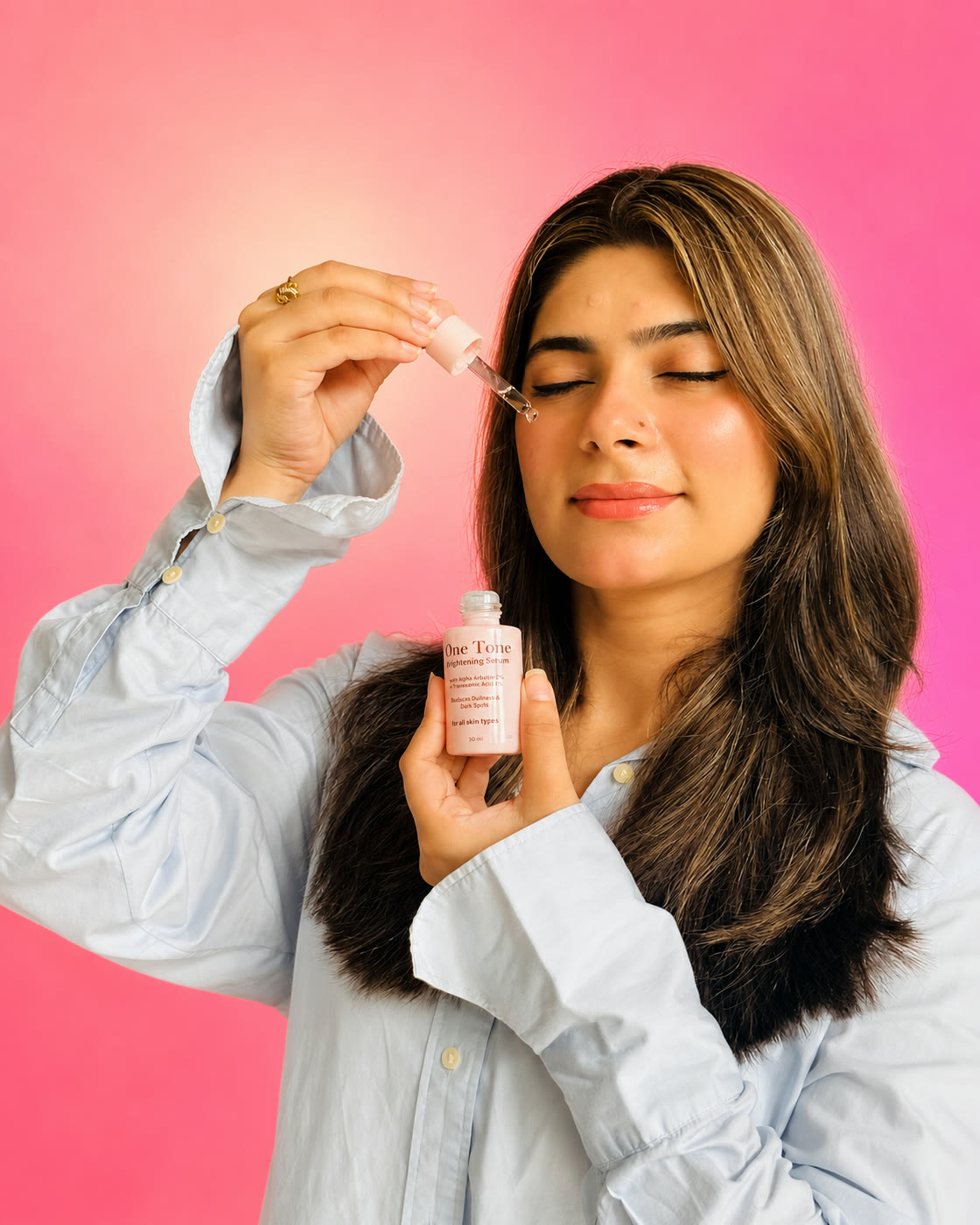
GenFul One Tone Brightening Serum combines vitamin C, alpha arbutin, niacinamide, ferulic acid and vitamin B5 for this reason. Apply a few drops after cleansing, then moisturise. Use sunscreen in the morning.
For extra help with texture and tan, add an exfoliating toner such as Glyco De-Tan Toner two or three evenings a week. Use it on different nights from other strong acids at first.
How long does it take?
Pigment fades slowly. Light marks may improve in four to eight weeks. Deeper marks often take three to six months, sometimes longer. Take a photo in the same light every two weeks so you can see the change, because it is hard to notice day to day.
When to get professional help
See a dermatologist if marks are not improving after three to four months of consistent care, if you have pitted or raised scars, or if you have patches of pigment not linked to acne, such as melasma. Prescription creams and in-clinic treatments can help where skincare alone cannot.
| Ingredient | How it helps | Find it in |
|---|---|---|
| Vitamin C (sodium ascorbyl phosphate) | Antioxidant; interferes with melanin production | One Tone Brightening Serum |
| Alpha arbutin | Slows tyrosinase, the enzyme that makes pigment | One Tone Brightening Serum |
| Niacinamide | Reduces pigment transfer to the skin surface | One Tone Brightening Serum, NiaDrop Anti Acne Serum |
| Azelaic acid | Treats breakouts and the marks they leave | NiaDrop Anti Acne Serum |
| Glycolic and lactic acid | Shed pigmented surface cells faster | Glyco De-Tan Toner |
| Mandelic acid | Gentle exfoliation that smooths texture | SaliSlay Anti Acne Cleanser |
| Sunscreen with iron oxides | Blocks UV and visible light that keep marks dark | Daily Saviour Tinted SPF 60 |
| Product | Key ingredients | Best for | When to use | Price |
|---|---|---|---|---|
| One Tone Brightening Serum | Vitamin C, alpha arbutin, niacinamide, ferulic acid | Dark spots, acne marks, uneven tone | Night; mornings once your skin is used to it | Rs 1,839 |
| Daily Saviour Tinted SPF 60 | Broad-spectrum SPF 60 with a tint | Stopping marks from darkening | Every morning | Rs 1,519 |
| Glyco De-Tan Toner | 7% glycolic acid, lactic acid | Texture, tan, stubborn marks | 2 to 3 evenings a week | Rs 1,560 |
A simple routine for dark spots
Morning: gentle cleanser, One Tone serum, GenHydra moisturiser, SPF 60. Evening: cleanser, One Tone serum, moisturiser, with Glyco De-Tan Toner on two or three nights a week. The Glowing Bundle includes the serum, moisturiser and sunscreen together.
Frequently asked questions
How long do acne marks take to fade?
Light brown marks often improve in 4 to 8 weeks with consistent care. Deeper marks can take 3 to 6 months. Without daily sunscreen they can stay for much longer.
Are acne marks the same as acne scars?
No. Flat brown or red marks are discolouration and fade with time and the right products. Dents or raised bumps are scars and need treatment from a dermatologist.
What is the best ingredient for dark spots on brown skin?
A combination works better than one ingredient: vitamin C, alpha arbutin and niacinamide on pigment, plus daily sunscreen. Medium and deeper skin tones, including most Pakistani skin, are more prone to dark marks, so sun protection matters even more.
Can I use lemon or toothpaste on acne marks?
No. Lemon juice and toothpaste irritate the skin, and irritation can make pigment darker. Use proper brightening products and sunscreen instead.
Which GenFul product is best for acne marks?
One Tone Brightening Serum (Rs 1,839) combines vitamin C, alpha arbutin and niacinamide. Use it with Daily Saviour Tinted SPF 60 in the morning; both come in the Glowing Bundle.
اردو میں خلاصہ
دانوں کے زیادہ تر کالے نشان داغ نہیں بلکہ اضافی رنگت ہوتے ہیں، اور یہ ختم ہو سکتے ہیں۔ نئے دانوں کو روکیں، انہیں نہ چھیڑیں، روزانہ سن بلاک لگائیں اور وٹامن سی، الفا آربیوٹن اور نیاسینامائیڈ جیسے اجزا استعمال کریں۔ ہلکے نشان 4 سے 8 ہفتوں میں اور گہرے نشان 3 سے 6 مہینوں میں ہلکے ہوتے ہیں۔ لیموں یا ٹوتھ پیسٹ نہ لگائیں۔
Sources
Key claims in this guide are based on the research and guidance below. This guide is general skincare information, not medical advice.
- Davis EC, Callender VD. Postinflammatory hyperpigmentation: a review of the epidemiology, clinical features, and treatment options in skin of color. J Clin Aesthet Dermatol. 2010;3(7):20-31. pubmed.ncbi.nlm.nih.gov
- Hakozaki T, et al. The effect of niacinamide on reducing cutaneous pigmentation and suppression of melanosome transfer. Br J Dermatol. 2002;147(1):20-31. pubmed.ncbi.nlm.nih.gov
- Fitton A, Goa KL. Azelaic acid: a review of its pharmacological properties and therapeutic efficacy in acne and hyperpigmentary skin disorders. Drugs. 1991;41(5):780-98. pubmed.ncbi.nlm.nih.gov
- Boo YC. Arbutin as a skin depigmenting agent with antimelanogenic and antioxidant properties. Antioxidants (Basel). 2021;10(7):1129. pubmed.ncbi.nlm.nih.gov
- American Academy of Dermatology. How to select a sunscreen. www.aad.org